

























NED NWOKO ADVOCATES CREATION OF NATIONAL AGENCY FOR MALARIA ELIMINATION
Says Nigeria cannot continue to lead the world in malaria deaths.
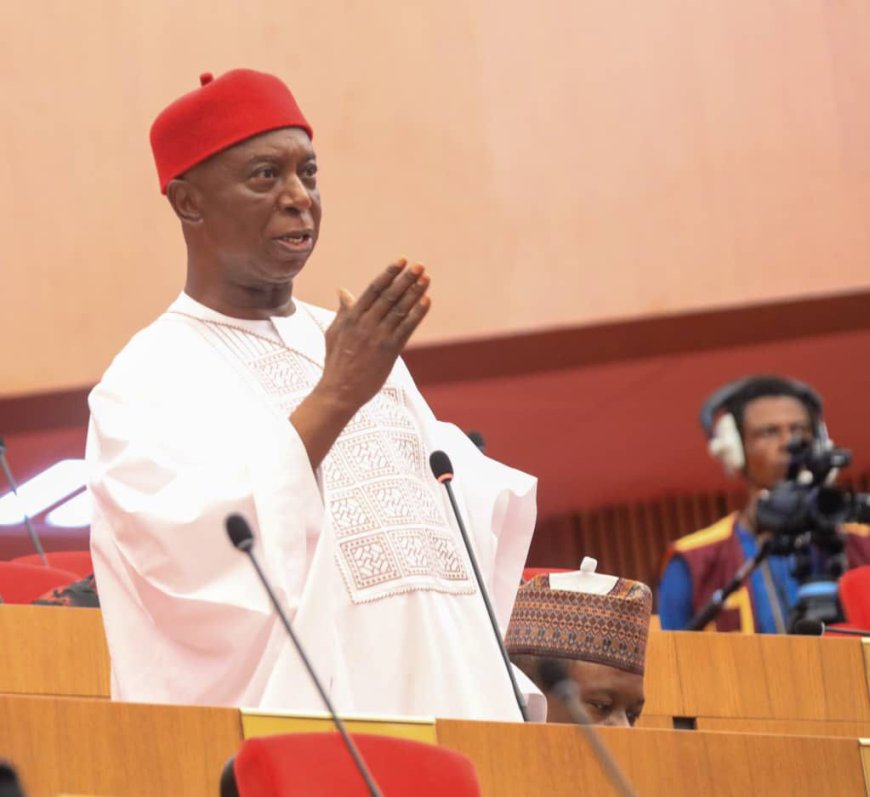
Abuja: Senator (Prince) Ned Munir Nwoko, representing Delta North Senatorial District, has called for the establishment of a dedicated agency to drive Nigeria’s malaria eradication efforts. He made this call during a public hearing on his proposed legislation, A Bill for an Act to Establish the National Agency for Malaria Elimination (SB.172), held at the National Assembly yesterday.
Speaking during the hearing, Senator Nwoko expressed deep concern over the alarming statistics released by the World Health Organization (WHO) in its 2024 malaria report. According to the report, Africa records approximately 600,000 malaria-related deaths annually, with Nigeria alone accounting for over 184,000 deaths, the highest burden globally.
“Beyond these devastating numbers are families torn apart, futures aborted, and a nation’s productivity significantly weakened,” he said.
The lawmaker described malaria not merely as a health issue, but as a structural crisis that continues to claim lives, impair maternal health, and erode the economic foundation of the country. He highlighted that malaria contributes to about 11 percent of maternal mortality in Nigeria, with complications such as severe anemia, miscarriages, stillbirths, and infant deaths disproportionately affecting vulnerable populations.
He further noted the economic impact of malaria, citing the loss of millions of man-hours annually due to the disease. “Entire sectors experience drops in efficiency. Businesses absorb avoidable health-related costs, and our national output is compromised simply because we have normalized what should never have been normalized,” Nwoko said.
Drawing comparisons to the global response to the COVID-19 pandemic, Senator Nwoko pointed out that within months of the outbreak, the world mobilized to develop vaccines, unlock funding, and deploy containment measures. In contrast, malaria, despite being a centuries-old health crisis, continues to receive fragmented attention and inadequate intervention.
He acknowledged the contributions of private efforts, including initiatives by his own foundation, which has supported advocacy, research, and hosted a strategic WHO meeting in Idumuje Ugboko to develop a Pan-African strategy for malaria elimination. However, he emphasized that private efforts cannot substitute for the role of national institutions.
Nwoko criticized the current health architecture in Nigeria, stating that it is inadequate to lead a sustainable fight against malaria. He noted that the National Malaria Elimination Programme (NMEP) remains a policy unit without sufficient power; the National Primary Healthcare Development Agency (NPHCDA) lacks the scale and authority for nationwide eradication efforts; and the Nigeria Centre for Disease Control (NCDC), while effective during COVID-19, is peripheral in malaria-related matters. He also pointed out that the Presidential End Malaria Council lacks legislative anchoring and executive authority.
To address these gaps, the proposed bill seeks to establish a centralized and autonomous National Agency for Malaria Elimination (NAME). The agency, according to the bill, will be mandated to:
1. Formulate and implement national malaria eradication policies
2. Coordinate inter-agency and cross-sectoral responses with legal authority
3. Mobilize and manage resources efficiently and transparently
4. Invest in advanced malaria vaccine research, including emerging global innovations
“Nigeria cannot continue to lead the world in malaria deaths,” Senator Nwoko declared. “Our vectors are evolving, our parasites adapting. A fragmented response structure cannot match a mutating threat. We need a unified, science-driven, and legislatively backed institution with the singular mandate to end malaria in Nigeria.”
He urged Nigerians, civil society groups, the medical community, and policymakers to support the bill and the creation of the agency, calling it a critical national priority.
“This is more than a policy proposal. It is a national emergency. We must act with urgency, unity, and resolve. The time to eliminate malaria is now,” he said.
What's Your Reaction?