















ANIOMA STATE CREATION: IDENTITY, HISTORY, AND THE PROMISE OF A NEW DAWN
15th November 2025 by Great Odifili
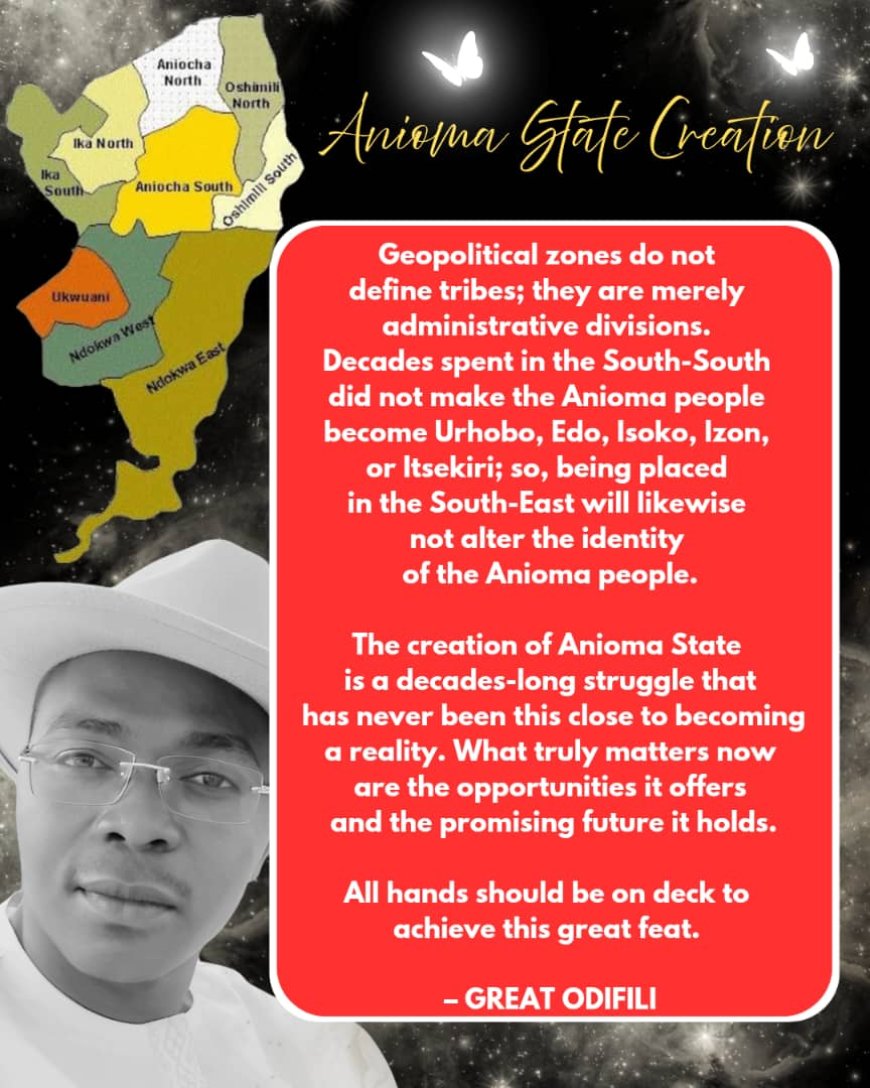
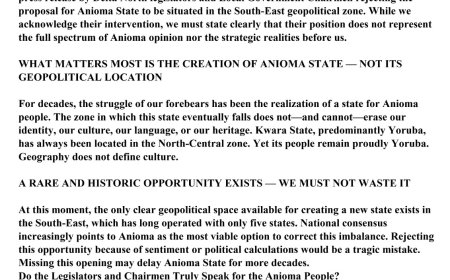
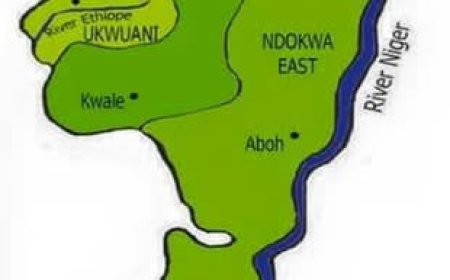
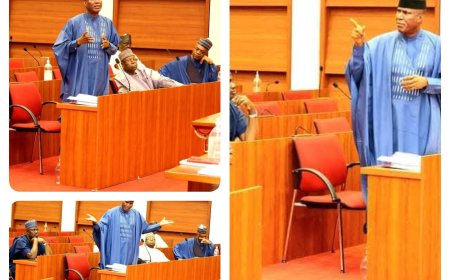
The debates emanating from the proposed creation of Anioma State currently championed with remarkable energy by the Senator representing Delta North Senatorial District has gained national attention. While a vast majority of Anioma people celebrate the possibility of a new state with genuine excitement, seeing it as a long-awaited opportunity for growth, empowerment, and fairness, others express concern about the proposed placement of the new "Anioma" state within the South-East geopolitical zone to balance the decades-old deficit of state in the South-East which many perceives and have criticised as marginalisation and the attempt to correct its numerical disadvantage. Yet, beyond fear and excitement lies the issue of identity, history, and progress that must be clearly understood.
It is important to emphasize that geopolitical delineation in Nigeria is primarily for administrative purposes; it does not determine ethnicity. For decades, the Anioma people have existed within the South-South zone, yet this has not made them Urhobo, Isoko, Izon, or Itsekiri. Each ethnic group has preserved its own cultural roots, origin stories, and identity. Likewise, being placed in the South-East would not turn the Anioma people into anyone or anything else. Government boundaries cannot rewrite the identity of a people whose ancestry, language, traditions, values and experiences are already deeply established. The essence of Anioma identity remains intact, rooted not in political zoning, but in heritage.
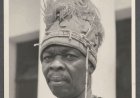
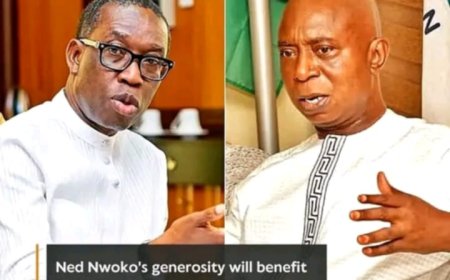
The ongoing push for Anioma State is not a sudden political invention; it is a continuation of a long, resilient agitation. From Chief Dennis Osadebay - the premier of the old Mid-Western Region to the persistent advocacy of Anioma Congress and the voices of countless cultural and political leaders across generations, Anioma people have consistently demanded a state that reflects their identity and brings governance closer to their communities. Senator Ned Nwoko’s present efforts are not isolated; they stand firmly on the shoulders of those who fought for justice, equity, and recognition many years before now. The dream of Anioma State is, therefore, not new; it is inherited, nurtured, and now within reach.
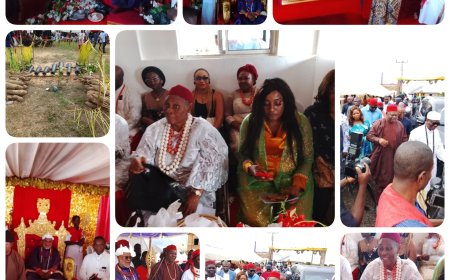
Although ethnic alignment should not be a defining factor in the debate, it is still important to acknowledge the historical truth: the Anioma people share strong cultural, linguistic, and traditional ties with the Igbo. Their names, festivals, marriage customs, market cycles, folklore, and even tonal speech patterns mirror those found across the Igbo cultural landscape. Whether Anioma emerged from the Igbo or the Igbo emerged from Anioma is a question for historians, not a barrier to contemporary political progress. What matters is that both groups belong to the same broad cultural family - a fact that strengthens, rather than diminishes, Anioma identity.
At this critical moment, the conversation must move beyond the argument of South-South versus South-East placement. The true substance of Anioma State lies in the benefits it promises: more localized governance, increased political representation, equitable distribution of local governments, improved development planning, greater access to federal opportunities, and the preservation of a proud cultural heritage. These are tangible advantages with the power to transform the lives of millions, far outweighing any debate over geopolitical labels.
Anioma people must therefore focus on unity, clarity of purpose, and the bigger picture. The priority should be securing the creation of the state, embracing the endless opportunities it presents, and positioning the region for meaningful progress. What lies ahead is far more important than any argument about geographical placement. The Anioma dream is close and closer than ever and this is the moment to pursue it together, free of rancour, bias, or distracting political divisions.
What's Your Reaction?